Last fact-checked: August 24, 2026. Services, prices and eligibility can change; verify live provider information before acting.
Good Korean etiquette is less about memorizing ceremonial rules and more about reading the setting: keep public spaces orderly, speak at a moderate volume, follow shoes-off instructions, respect queues and ask before photographing people. Younger Koreans may be informal, while family homes, workplaces, memorial spaces and religious sites can be more traditional.
A sincere apology and quick adjustment matter more than performing an exaggerated bow. If a local host gives different instructions, follow the host rather than a universal rule from the internet.
Public transport
- Let passengers exit before boarding.
- Do not occupy priority seating when someone needs it; local practices vary by carriage and city.
- Keep calls and videos quiet and bags out of aisles.
- Avoid blocking doors while checking your route.
Restaurants and shared food
- Wait until seating is clear; some restaurants assign tables.
- Use serving utensils when provided and do not return used utensils to shared dishes.
- Do not assume tipping is expected; follow any explicit venue policy.
- Return trays and sort waste where a self-service system requests it.
Homes, temples and traditional spaces
- Remove shoes when the host or signage indicates.
- Dress and speak respectfully at religious, memorial and ceremonial sites.
- Do not photograph worshippers, residents or private interiors without permission.
- Treat hanbok and cultural props carefully rather than as comedy costumes.
Hands, names and hierarchy
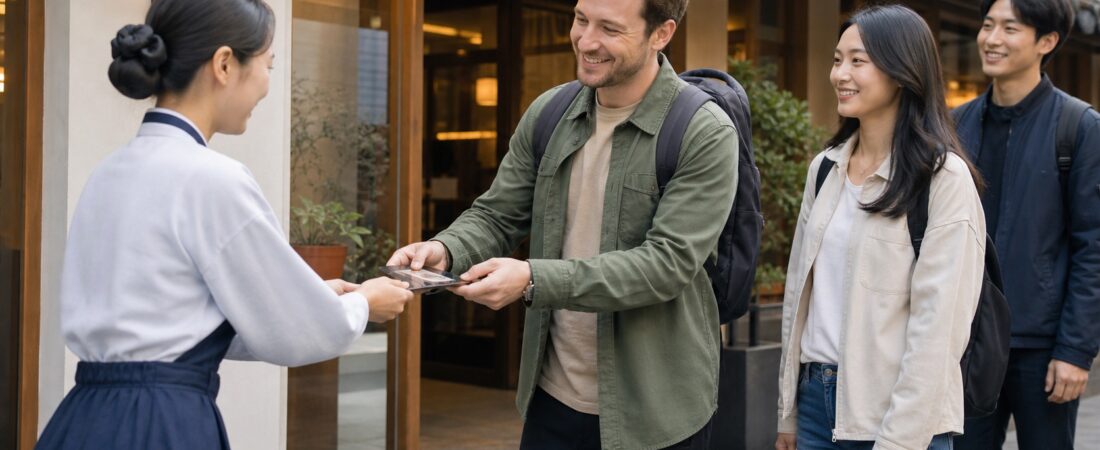
Using two hands, or supporting one wrist with the other, is a polite way to give or receive an item in a formal interaction. In casual settings one hand may be normal. Use the name or title a person offers, and do not guess someone’s age or status aloud.
Mistakes tourists overcorrect
- Bowing deeply in every casual interaction.
- Assuming all Koreans follow one traditional rule.
- Avoiding conversation because you fear a small mistake.
- Treating a language barrier as permission to ignore staff instructions.
- Use our food-ordering guide for low-stress restaurant communication.
Save this checklist
- Watch what locals do in the same setting.
- Keep doors, stairs and aisles clear.
- Ask before photographing people.
- Apologize briefly and adjust when corrected.
Quick questions
Do I have to bow to everyone?
No. A small nod can be polite, and verbal greetings are normal. Deep bows belong to more formal or apologetic situations. Match the setting instead of performing a ritual at every shop counter.
Is tipping rude in Korea?
Ordinary restaurants and taxis do not generally require tipping, but a business may have an explicit service policy. Pay the listed amount and do not force extra cash on staff who decline it.
Must I use two hands for everything?
Two hands are a safe polite choice in formal exchanges, especially with an older person or host. Casual peers often use one hand. The goal is attentiveness, not a rigid pose.