Last fact-checked: August 24, 2026. Services, prices and eligibility can change; verify live provider information before acting.
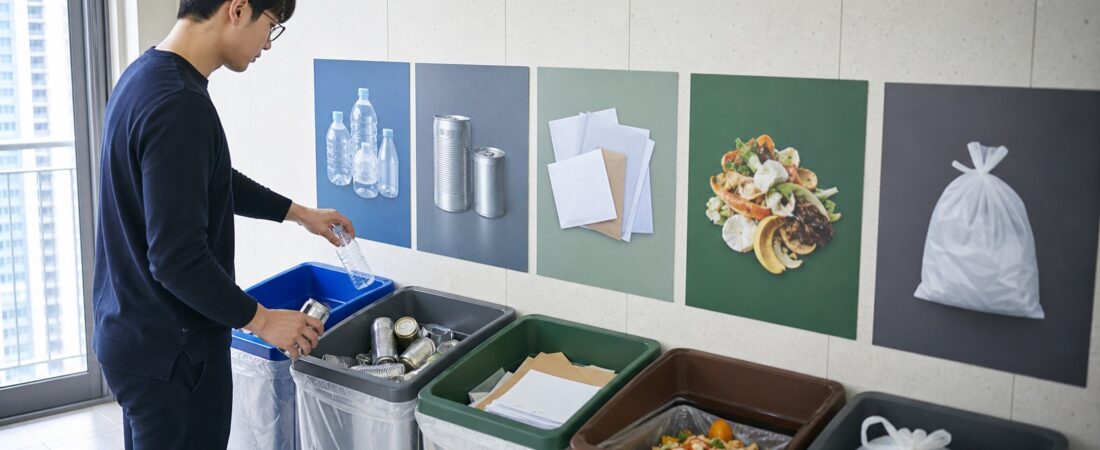
Korea separates general waste, food waste, recyclables and bulky items. General waste normally goes in an official volume-based bag purchased for your local district; food waste uses the building or district method; clean recyclables are separated; and furniture or large appliances require a report, sticker or scheduled pickup.
The exact bags, collection days and food-waste system vary by district and building. Ask your landlord or management office and verify the district website before copying a schedule from another neighborhood.
General waste
- Buy the correct official bag at a nearby convenience store or supermarket.
- Use the bag only in the district or area for which it is sold.
- Tie it securely and put it out only at the designated place and time.
- Do not hide food waste, batteries or recyclables inside.
Food waste
Remove excess liquid and use your building’s designated container, RFID system, sticker or food-waste bag. Hard shells, large bones, pits, onion and garlic skins and some tea materials may be treated as general waste because they are unsuitable for food-waste processing; local guidance controls.
Recyclables
- Empty, rinse and dry containers.
- Separate paper, cardboard, glass, cans, plastics and other categories as instructed.
- Remove food residue and non-recyclable attachments where practical.
- Do not place batteries, lamps or electronics in ordinary recycling; use dedicated collection points.
- Follow transparent-bag or bin rules for your building.
Bulky waste and appliances
Furniture, mattresses and other large items usually need online or community-office reporting and a paid sticker or confirmation number. Some intact large appliances can qualify for scheduled collection. Never leave an item beside the bins without completing the local process.
A real district example
Mapo-gu’s official English guide shows why local checking matters: it publishes separate methods for food, living, recycling and bulky waste, along with neighborhood-specific collection days. Use it as an example only if you live in Mapo; otherwise open your own district’s current instructions.
Save this checklist
- Ask the building for its current guide.
- Buy the correct district waste bag.
- Empty and rinse recyclables.
- Report bulky waste before disposal.
Quick questions
Why are some kitchen scraps general waste?
Food-waste processing is designed for material that can be handled as feed or compost input. Hard shells, bones, pits and fibrous skins can damage equipment or be unsuitable, so local guides direct them to general waste.
Can I put recyclables in any clear bag?
Building and district rules vary. Some request a transparent bag, others use category bins or scheduled curbside sorting. Follow the location-specific sign rather than one nationwide assumption.
What happens to furniture?
Large items usually require a paid report or collection booking. Record the item, location and pickup date accurately, then attach the sticker or confirmation as instructed. Reusable items may have separate donation options.